Shenzhen Acedo Electronics Technology Co., Ltd

Closed-Circuit Television (CCTV) Installation Plan for Elevator Cab
Upload Time:
Dec 29, 2025
Closed-Circuit Television (CCTV) Installation Plan for Elevator Cab
1.0 Project Objective
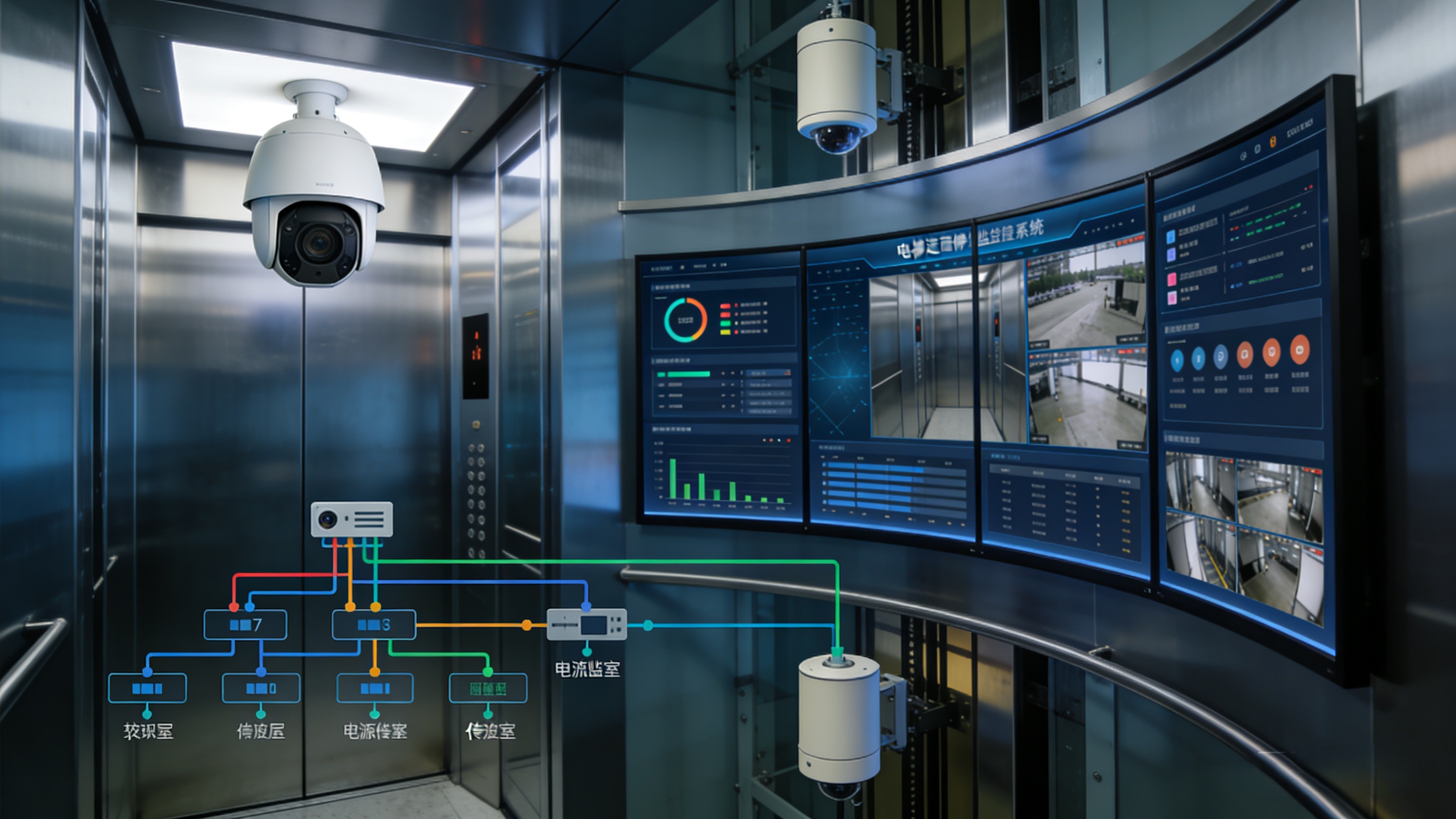
To design and specify the cabling infrastructure and technical requirements for the installation of a CCTV surveillance system within the elevator car, ensuring reliable, secure, and high-quality video monitoring for safety and security purposes.
2.0 Cabling Specifications & Requirements
2.1 Cable Type & Path:
-
Primary Cable: Shielded Twisted Pair (STP) cable, specifically designed for elevator travel applications (high-flex, durable, with a tensile strength member). Category 6a STP is recommended for digital IP cameras to support Power over Ethernet (PoE) and high-speed data transmission.
-
Alternative/Optional: Coaxial cable (e.g., RG-59 Siamese cable with integrated power conductors) may be used for analog HD cameras. However, IP-based systems are strongly preferred for future scalability and integration.
-
Routing Path: Cables must be run from the elevator machine room or a dedicated riser closet to the top of the elevator shaft. The final connection to the moving car is made via the elevator's traveling cable (also called the traveling or trailing cable). The CCTV cables must be integrated into this traveling cable bundle by the elevator manufacturer or a certified technician, following strict safety and mechanical standards.
2.2 Power Supply:
-
PoE (Power over Ethernet): The preferred method. Power will be supplied from a PoE switch or injector located in the elevator machine room. The switch should be connected to an Uninterruptible Power Supply (UPS) to maintain camera operation during power fluctuations or outages.
-
Local Power: If PoE is not feasible, a dedicated 24VAC or 12VDC power supply (also UPS-backed) must be installed in the machine room, with power conductors running within the traveling cable.
2.3 Connectivity & Hardware:
-
Network Video Recorder (NVR): To be installed in the secure security room or data closet. It must have sufficient storage capacity for the required video retention period (e.g., 30-90 days).
-
Switch: A managed PoE switch with enough power budget for all cameras, preferably with VLAN capability for network segmentation.
-
Camera Housing: The camera must be housed in a vandal-resistant dome enclosure suitable for elevator interiors.
3.0 Key Analysis & Focus Points
3.1 Critical Technical Considerations
-
Traveling Cable Integration: This is the most critical and complex aspect. The work must be coordinated with and often performed by the elevator maintenance contractor or OEM to avoid voiding warranties and ensure it does not interfere with the elevator's control and safety systems. Improper installation can cause cable fatigue, breakage, and interference.
-
Signal Integrity & Interference: Elevator shafts are electrically noisy environments (motors, drives). Using shielded (STP) cables with proper grounding is mandatory to prevent electromagnetic interference (EMI) from corrupting video signals. The grounding must be performed at one end only (typically at the switch/NVR end) to avoid ground loops.
-
Network Configuration: The elevator CCTV system should be placed on a separate VLAN isolated from the corporate network. This enhances security, prevents broadcast traffic from affecting elevator controls, and simplifies management. IGMP snooping should be configured on the switch to manage multicast video traffic efficiently.
-
Remote Power: Using PoE from the machine room is ideal as it centralizes power backup and eliminates the need for a power source within the car itself.
3.2 Privacy & Compliance
-
Signage: Clear signage must be posted at elevator entrances and inside the cab stating "This elevator is under video surveillance" to comply with local privacy laws and regulations.
-
Camera Field of View (FoV): The camera should be positioned to cover the entire cabin interior, including the control panel and door, but must not be angled to view into adjacent private spaces (e.g., apartment corridors, office doorways) when the doors open. The focus is on internal cab activity.
-
Data Security: Video footage must be encrypted in transit and at rest. Access to the live feed and recorded archives must be restricted to authorized security personnel only, with access logs maintained.
3.3 Operational & Maintenance Focus
-
Service Access: The design must allow for easy camera maintenance or replacement with minimal disruption to elevator service. A service bypass switch may be required.
-
Lighting Conditions: Elevator cabs have varying light levels. The camera must have excellent Wide Dynamic Range (WDR) or True WDR to handle the extreme contrast between a bright hallway and the darker cab, and good low-light performance.
-
Testing: Post-installation, extensive testing is required throughout the full travel of the elevator to ensure continuous, stable video feed without dropouts, interference, or rolling lines, especially at the farthest points from the switch.
Summary of Key Priorities:
-
Coordination with Elevator Vendor: Essential for safe, warranty-compliant installation in the traveling cable.
-
EMI Protection: Use of shielded cabling and proper grounding to ensure signal clarity.
-
Isolated & Secure Network: VLAN segregation for security and performance.
-
Privacy by Design: Appropriate camera placement and mandatory signage.
-
Environmental Suitability: Cameras must handle lighting extremes and physical protection.
Relevant News

Contact Us
#526, Huayun No.2 Building, zhenxing Road, futian district ,shenzhen